

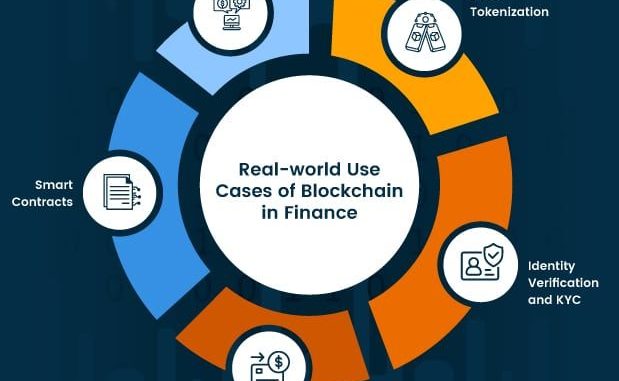
In recent years, blockchain technology has been making waves in various industries, and one of the sectors that has seen significant advancements is finance. With its decentralized and transparent nature, blockchain has the potential to revolutionize the way financial transactions are conducted, bringing greater security, efficiency, and cost-effectiveness to the industry. In this article, we will explore some of the real-world use cases of blockchain in finance.
1. Cross-Border Payments
One of the most prominent use cases of blockchain in finance is cross-border payments. Traditionally, sending money across borders can be a complex and expensive process, involving multiple intermediaries and high fees. Blockchain technology enables peer-to-peer transactions without the need for intermediaries, reducing costs and speeding up the process. Companies like Ripple and Stellar are leveraging blockchain to facilitate fast and secure cross-border payments for individuals and businesses around the world.
2. Smart Contracts
Smart contracts are self-executing contracts with the terms of the agreement directly written into code. These contracts are stored on a blockchain network, ensuring transparency and immutability. In finance, smart contracts can automate various processes, such as loan issuance, insurance claims, and trade settlements. Platforms like Ethereum have made smart contracts accessible to businesses, enabling them to streamline operations and reduce the risk of fraud.
3. KYC and Identity Verification
Know Your Customer (KYC) and identity verification are crucial processes in the financial industry to prevent money laundering and fraud. Blockchain technology can simplify and secure these processes by creating a decentralized identity system. By storing individuals’ identity information on a blockchain network, financial institutions can verify customers’ identities quickly and securely, reducing the risk of identity theft and fraud.
4. Supply Chain Finance
Blockchain technology is also being utilized in supply chain finance to enhance transparency and streamline operations. By recording transactions on a shared ledger, stakeholders in the supply chain can track and verify the flow of goods and payments in real-time. This increased visibility can help reduce delays, disputes, and fraud, improving the efficiency and reliability of supply chain finance processes.
5. Tokenization of Assets
Tokenization is the process of converting real-world assets, such as real estate, stocks, or commodities, into digital tokens on a blockchain network. By tokenizing assets, these assets can be divided into smaller, more liquid units, enabling fractional ownership and faster trading. This opens up new investment opportunities for individuals and institutions, making previously illiquid assets more accessible and tradable.
6. Decentralized Finance (DeFi)
Decentralized Finance (DeFi) is a rapidly growing sector that leverages blockchain technology to create open and interoperable financial systems. DeFi platforms allow users to access a range of financial services, such as lending, borrowing, and trading, without the need for traditional financial intermediaries. By removing barriers to entry and reducing costs, DeFi is democratizing access to finance and revolutionizing the way financial services are delivered.
Overall, blockchain technology is proving to be a game-changer in the finance industry, unlocking new opportunities for efficiency, transparency, and security. As more companies and institutions adopt blockchain solutions, we can expect to see even more innovative use cases emerging in the future. With its potential to reshape the financial landscape, blockchain is certainly a technology to watch in the coming years.
Conclusion
With its decentralized and transparent nature, blockchain technology has the potential to revolutionize the finance industry. From cross-border payments and smart contracts to identity verification and supply chain finance, blockchain is enabling new and innovative solutions that are reshaping the way financial transactions are conducted. As more companies and institutions embrace blockchain technology, we can expect to see even more real-world use cases emerging, bringing greater efficiency, security, and accessibility to the world of finance.